Sustainability
Sustainability starts before the product is specified.
Sustainable procurement is not just about choosing a recycled chair or adding an FSC logo at the end of the process.
It starts with how the brief is written, how suppliers are selected, how products are compared, and how decisions are evidenced.
Design Tender helps clients build sustainability into the FF&E procurement process from the beginning, ensuring products are assessed not only on cost and appearance, but on durability, reusability, responsible sourcing, certification, carbon impact, compliance and end-of-life value.

Sustainability starts before the product is specified.
Sustainable procurement is not just about choosing a recycled chair or adding an FSC logo at the end of the process.
It starts with how the brief is written, how suppliers are selected, how products are compared, and how decisions are evidenced.
Design Tender helps clients build sustainability into the FF&E procurement process from the beginning, ensuring products are assessed not only on cost and appearance, but on durability, reusability, responsible sourcing, certification, carbon impact, compliance and end-of-life value.
From ESG intention to evidence
Many companies have sustainability targets, ESG commitments and internal reporting requirements.
The challenge is proving that procurement decisions support them.
FF&E can have a direct impact on embodied carbon, waste, indoor air quality, responsible sourcing and circular economy outcomes.
Poorly specified furniture can also create future replacement costs, disposal issues and weak audit trails.
Our role is to make sustainability visible inside the tender process.
38%
Buildings are responsible for 39% of global energy-related carbon emissions.
With 28% from operational emissions and 11% from materials and construction.
20%
Embodied carbon from construction and refurbishment makes up around 20% of UK built environment emissions.
95%
The WELL Standard requires at least 95% by cost of newly purchased furniture and furnishings within the project scope to meet stated VOC emissions limits.
108
SKA Rating for offices includes 108 good practice measures covering areas such as energy, materials, pollution, project delivery, transport and waste.
Why it matters
The commercial case for sustainable procurement
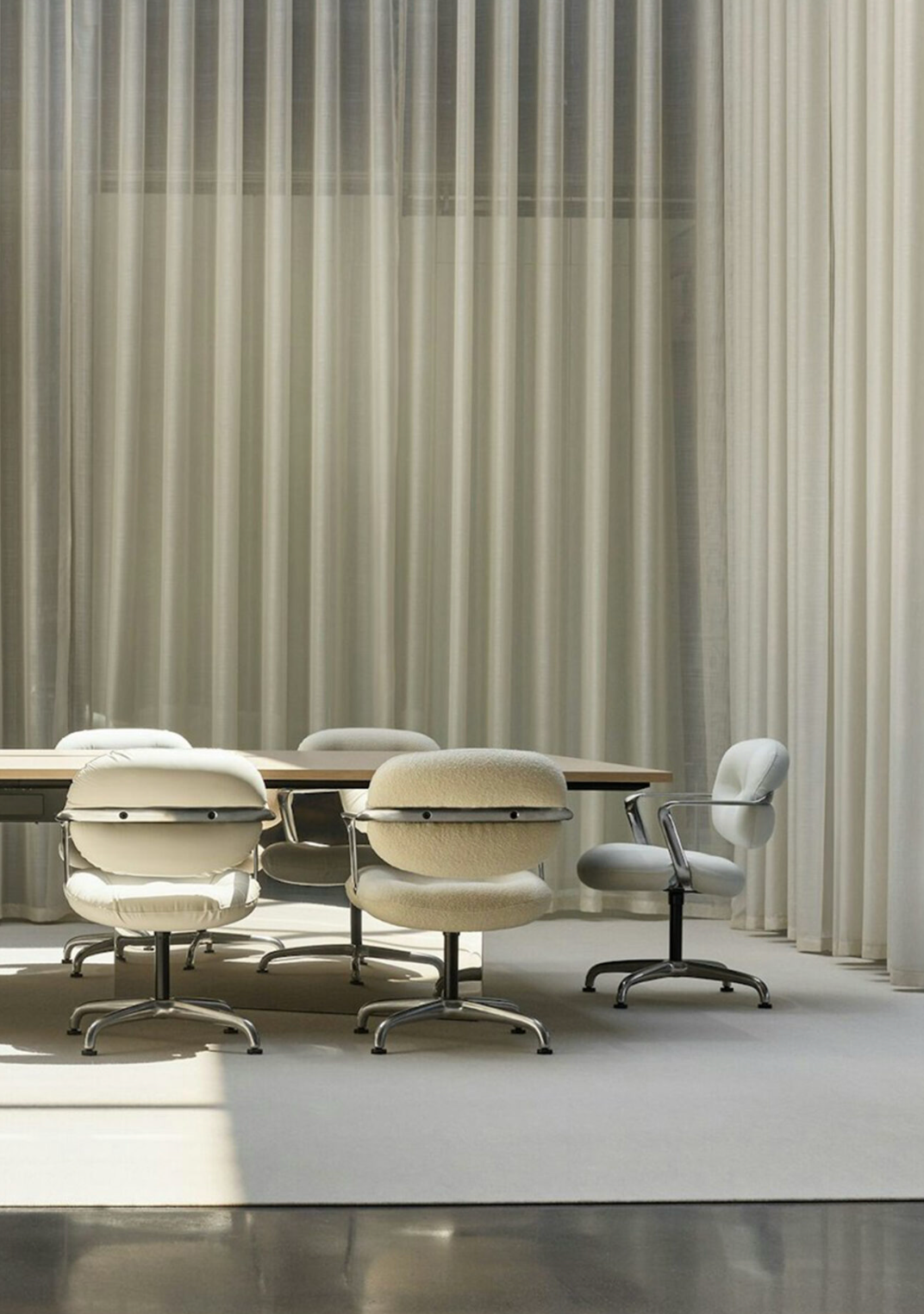
For commercial interiors, this matters because every fit-out decision has a material consequence: what is bought, how long it lasts, whether it can be reused, and what happens when it is removed.
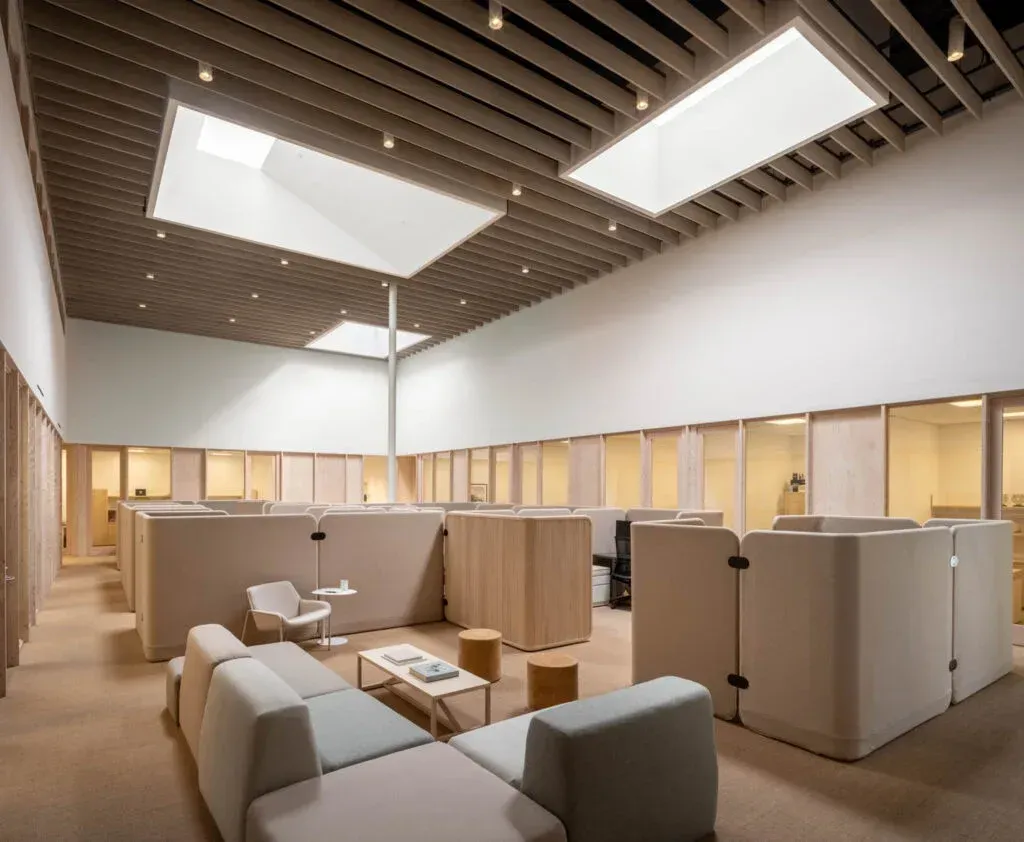
Sustainability in procurement is no longer just brand positioning.
It is increasingly part of governance, risk management, investor confidence, occupational strategy and long-term asset value.
The built environment is responsible for nearly 40% of global carbon emissions, with around 11% linked to materials and construction.
In the UK, embodied carbon from construction and refurbishment accounts for around 20% of built environment emissions.
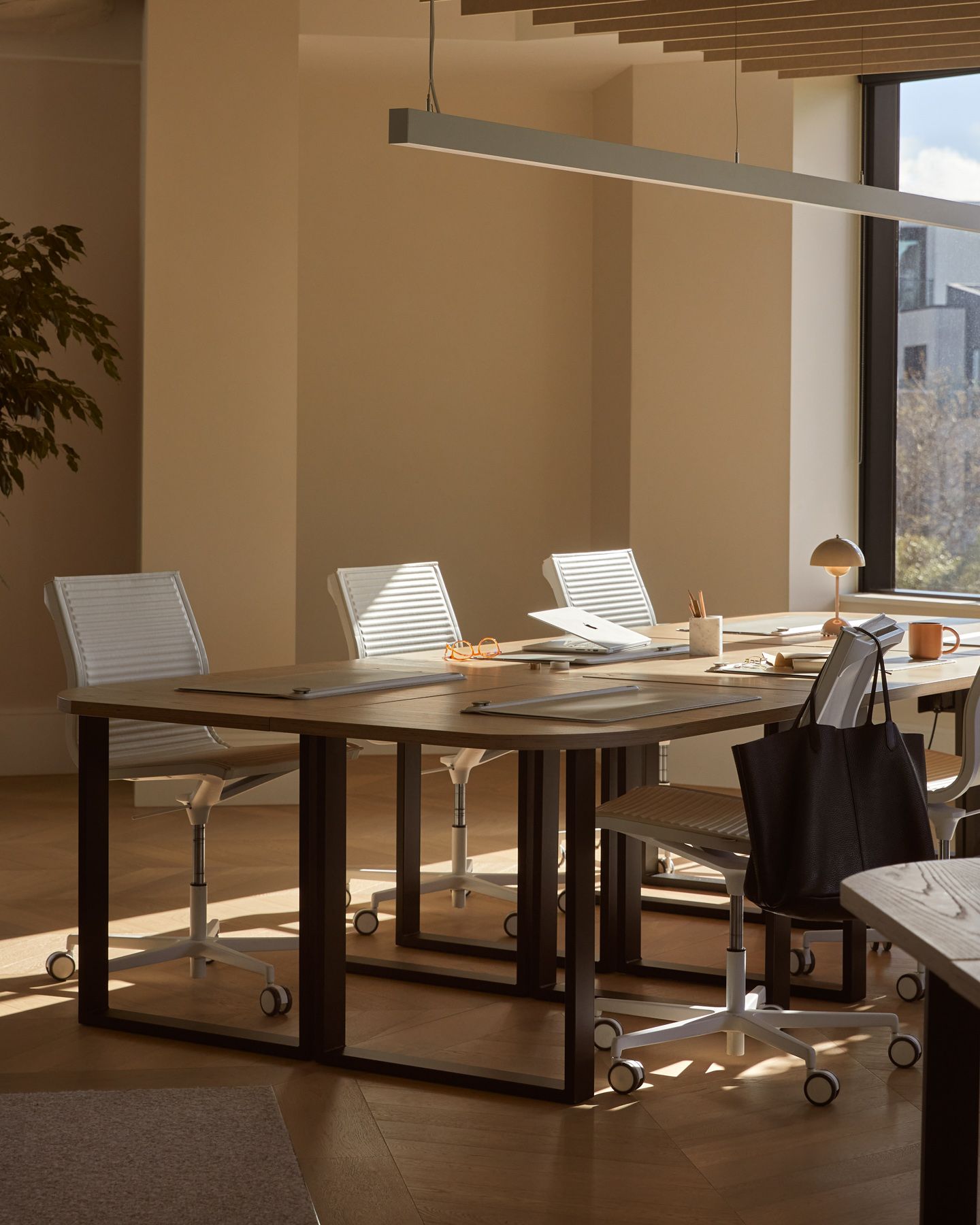
Companies are under growing pressure to evidence sustainability performance.
In the UK, Streamlined Energy and Carbon Reporting applies to quoted companies and large unquoted companies and LLPs that meet statutory thresholds, requiring energy and carbon data to be included in annual reporting.
The UK government has also developed UK Sustainability Reporting Standards based on the IFRS sustainability disclosure framework
Circular furniture thinking
The most sustainable product is often not simply the newest product with the best label.
It may be a product that can be reused, repaired, reupholstered, refurbished, redeployed or responsibly recycled at the end of its first life.
We help clients consider circular options early, including:
Reuse of existing furniture
Refurbishment and reupholstery
Modular systems that can be adapted over time
Products with replaceable components
Supplier take-back schemes
Furniture designed for disassembly
Reduced packaging and waste removal planning
End-of-life resale, donation or recycling routes
Thinking outside the box
From modular systems to supplier take-back schemes, we help you implement strategies that adapt to your evolving needs while minimising environmental impact.
Environmental Benefit
A WorldGBC case study involving CBRE and Crown Workspace reported a furniture reuse programme.
Which generated £40,000 in resale fees and £12,000 worth of donations, while giving cleared fixtures and fittings a second life.
Circular furniture thinking
The most sustainable product is often not simply the newest product with the best label.
It may be a product that can be reused, repaired, reupholstered, refurbished, redeployed or responsibly recycled at the end of its first life.
We help clients consider circular options early, including:
Reuse of existing furniture
Refurbishment and reupholstery
Modular systems that can be adapted over time
Products with replaceable components
Supplier take-back schemes
Furniture designed for disassembly
Reduced packaging and waste removal planning
End-of-life resale, donation or recycling routes
Thinking outside the box
From modular systems to supplier take-back schemes, we help you implement strategies that adapt to your evolving needs while minimising environmental impact.
Environmental Benefit
A WorldGBC case study involving CBRE and Crown Workspace reported a furniture reuse programme.
Which generated £40,000 in resale fees and £12,000 worth of donations, while giving cleared fixtures and fittings a second life.
At Design Tender, we transform sustainability goals into actionable tender requirements, ensuring that every supplier's response is evaluated against consistent criteria.
Comprehensive Product Certifications
Material Composition Transparency
Lifecycle Considerations
Impactful Waste Strategies
Longevity as sustainability
Invest in Quality, Reduce Waste
Durability is one of the most important sustainability decisions in commercial furniture.
A cheaper product that fails early is not better value. It creates replacement cost, waste, disruption and a weaker long-term environmental outcome.
We assess products not only by purchase price, but by performance, warranty, maintenance, repairability and suitability for the environment they are being used in.
The aim is to reduce unnecessary replacement cycles and protect both budget and environmental performance over time.
Sustainable procurement is also about the people using the space.
Furniture, finishes and materials can contribute to indoor air quality, comfort and wellbeing. WELL specifically addresses VOC emissions requirements for furniture and furnishings, helping projects reduce exposure to harmful emissions from newly purchased products.
We help clients ask the right questions before products are selected, so sustainability is connected to both environmental impact and user experience.
Sustainable Logistics
Our approach ensures that every aspect of logistics, from delivery to waste removal, is optimised for sustainability, minimizing environmental impact.
End-of-Life Planning
We assist clients in developing comprehensive end-of-life strategies that prioritise recycling and responsible disposal, reducing landfill contributions.
Waste Management Solutions
Effective waste management is crucial. We help identify and implement solutions that reduce waste throughout the project lifecycle.
Building Sustainability into Procurement
How do we define the target?
We start by identifying your environmental requirements, including internal ESG goals, BREEAM, WELL, SKA, FSC, and circular economy principles, ensuring that all project-specific sustainability criteria are clearly understood.
How do we write it into the brief?
Sustainability objectives are transformed into clear tender requirements, providing suppliers with precise guidelines on what evidence is needed to meet your sustainability standards.
What documentation do we request?
We request relevant certifications, product data, material information, VOC evidence, responsible sourcing details, warranties, and end-of-life options to ensure comprehensive sustainability compliance.
How do we compare claims fairly?
Our team reviews supplier responses consistently, enabling clients to distinguish between meaningful evidence and generic sustainability claims, ensuring informed decision-making.
How do we balance cost, quality, and impact?
We evaluate sustainability alongside budget, design intent, durability, lead time, compliance, and long-term performance, ensuring a holistic approach to procurement.
How do we support a clear decision?
We provide transparent recommendations that empower clients to select products that are not only commercially viable but also aligned with their sustainability objectives.
Sustainable Procurement Made Simple
Our structured approach to procurement ensures that sustainability is seamlessly integrated into every step, from initial brief to final recommendation, allowing for clarity and confidence in your choices.
Ready to take control of your next tender?